 ITABASHI
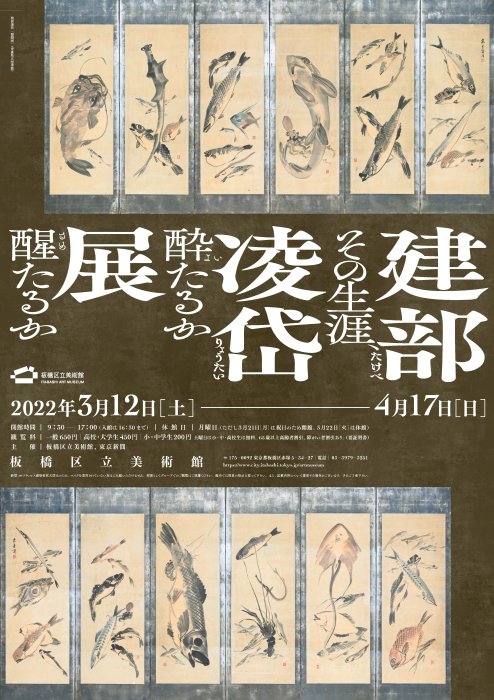
Tatebe Ryoutai Exhibition: His Life, Drunk or Awake
Tap image to enlarge.
| Event Name | Tatebe Ryoutai Exhibition: His Life, Drunk or Awake |
|---|---|
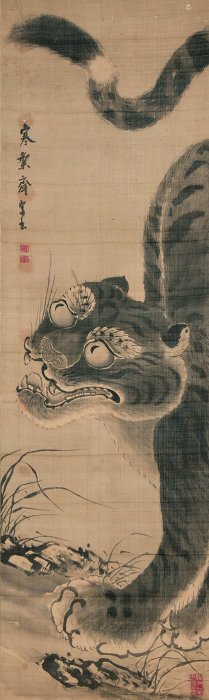
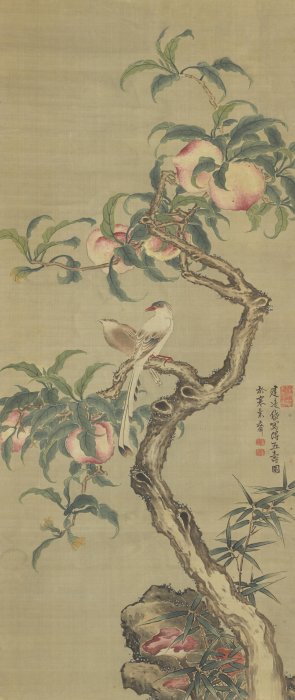
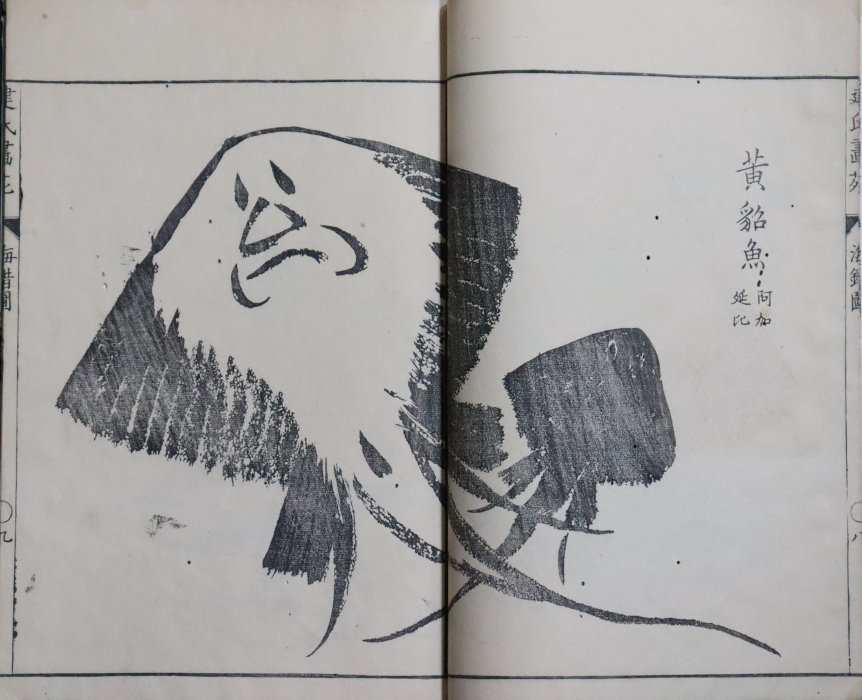
| Contents | This is the first full-scale exhibition of Tatebe Ryoutai (1719-1774), active in the mid-Edo period, whose works include Ryobukuro, Suyuan, Ayasoku, and Kanposai. Ryoutai was born in Edo, the second son of the Kitamura family, retainers of the Hirosaki domain, and received both literary and military education in Hirosaki. However, rumors of an illicit love affair with his elder brother's wife led him to run away from home at the age of 20, become an ordained Buddhist preacher, and later return to the priesthood, where he established himself through haikai (haikai) and traveled extensively, mainly in Edo and Kyoto. However, as soon as he opened his eyes as an advocate of katakana, he abandoned haikai altogether. He was also active as a poet, essayist, reader, and scholar of Japanese literature, and his abundant talents were described in "Shoku-konsei kaijin biography" by Mikuma Kachiro and Ban Kaoikei as "a man of great courage and talent" and "a man who could never tell whether he was drunk or sober during his entire life. Influenced by Pengjoh Hyakkawa, whom he met through haikai, Ryoutai excelled in painting, including haiga, and with the support of the Okudaira family of the Nakatsu domain, he went to Nagasaki in 1750, ahead of other Edo-style painters. He learned colorful and realistic flower-and-bird paintings from Tang Tong-ki Xiong-hui and Tang E-meri Ishizaki Motonori, and when he revisited Nagasaki in 1754, he studied under the Chinese painter Gu Han-yuan, who was known for his landscape paintings. Through these studies, he learned the latest styles imported from China and established his own unique style of painting. The publication of such works as "Kanposai Gafu" and "Jianji Gauen" can be said to be the result of his efforts. Among Ryoutai's works, which are known for their rough and bold brush strokes, a humorous side can be seen in a group of works called "Kaijakuzu," in which sea fishes swim wildly. We hope that through this exhibition, you will enjoy the variety of activities centering on Lingtai's painting career. |
| Date and Time | Saturday, March 12, 2022 - Sunday, April 17, 2022 Hours: 9:30 a.m. - 5:00 p.m. (Admission until 4:30 p.m.) Closed: Mondays (except March 21, which is a national holiday; closed on March 22) |
| Location | Itabashi Art Museum |
| Participation Fee | Adults 650 yen, high school and university students 450 yen, elementary and junior high school students 200 yen *Free admission for elementary, junior high and high school students on Saturdays. *Discounts are available for persons 65 and older and persons with disabilities (certificate required). |
| contact information (for inquiries) (e.g. corporate phone number) | Itabashi Art Museum TEL: 03-3979-3251 FAX: 03-3979-3252 |
| WEB | https://www.city.itabashi.tokyo.jp/artmuseum/index.html |
| reference file | |
| Map |