
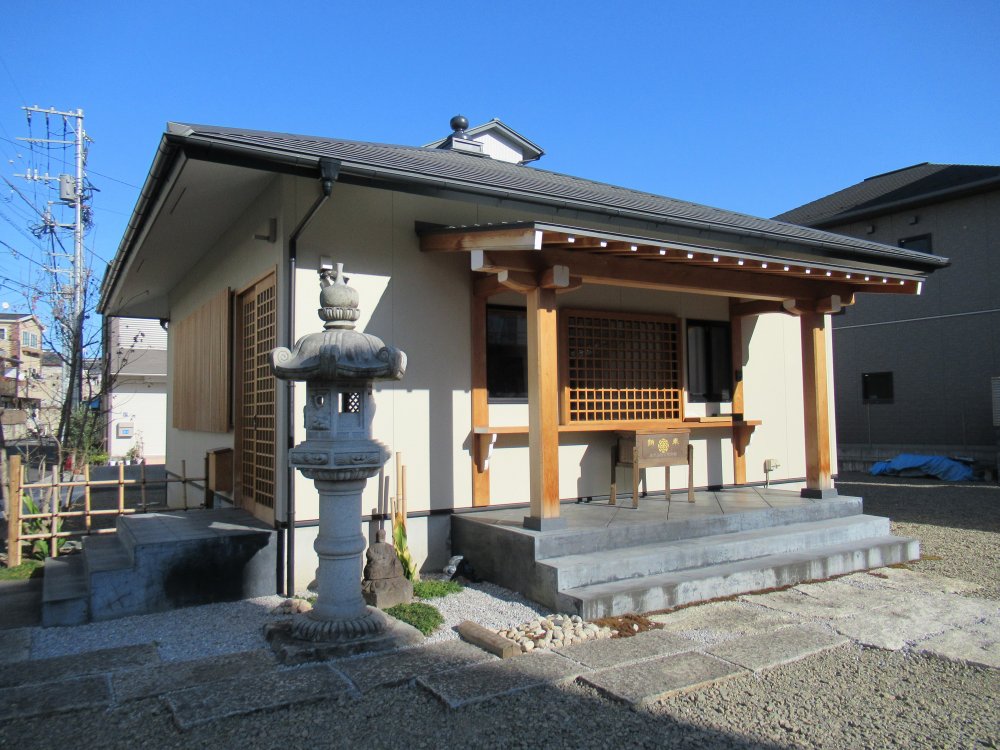
A temple that still retains the appearance of a horse stable from the era of inns.
 pilgrim's temple
Tap image to enlarge.
In the Edo period, the temple was called Dainichi-zan and was the only temple of the Tendai sect in the ward. It became a Shingon temple in 1947, and is now a branch temple of Narita-san Shinsho-ji Temple in Chiba Prefecture. The precincts of the temple were used as a place to tie up horses during the shukuba period, and horses used by the shogunate were tied up there. The Matou Kannon (Goddess of Mercy), erected in 1798, and a model of an eki-ma, an elaborate imitation of an innkeeper's horse, on the temple grounds are reminders of this era. The temple also has one of the largest collections of 50 ema (votive picture horses) in the city, with the largest number of ema having horse designs, indicating the deep connection between Henshoji and horses. In the hall, there is a painting of a prostitute visiting Henshoji Temple, which was drawn by Saichi Shiba, a town painter who lived in Kamijuku, and is a valuable material that gives us an insight into the customs of Itabashijuku in the early Meiji period.

- Location
- 40-7 Nakajuku
- nearest station
- 4 minutes walk from Itabashi-Kuyakushomae Station on the Toei Mita Line.
- TEL
- 03-3961-9628